Baby Driver
The kid with an iPod for every occasion — every device in Baby's collection, identified.
The scene
Baby doesn't go anywhere without music. Earbuds in, iPod in pocket, the world becomes a choreographed heist set to a perfectly curated soundtrack. He has tinnitus from a childhood car accident, and the music covers the ringing — but it also makes him untouchable. When the music plays, Baby drives like nobody else on Earth.
Edgar Wright's 2017 film is built around a simple premise: every action scene is synchronized to a song, and the songs live on iPods. Not a phone. Not a streaming app. Physical devices with click wheels and limited storage, loaded with specific tracks for specific moments. Baby rotates through them the way a DJ rotates through crates.
The iPods aren't props. They're instruments.
The gear
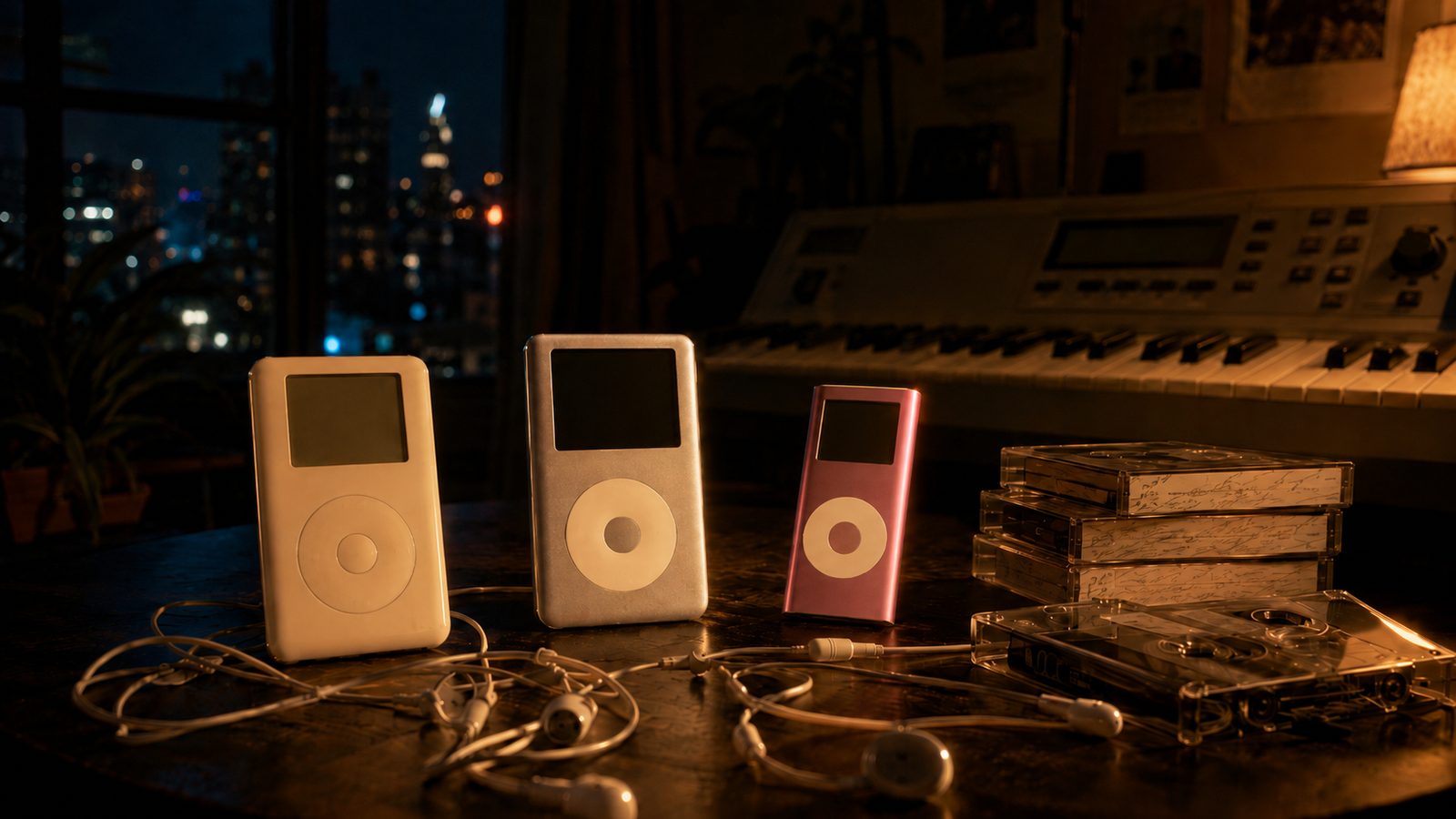
Baby carries multiple iPods throughout the film. The confirmed models include a 1st generation iPod (2001) — the original white brick with the mechanical scroll wheel — visible in a childhood flashback. He also uses a 4th generation iPod Photo (the color-screen model from 2004) and a pink iPod Mini, the compact aluminum model that was the must-have device of 2005.
The variety is deliberate. Baby doesn't have one iPod — he has a collection, each loaded with different playlists for different moods and situations. Wright has said in interviews that the iPod choice was both a character detail (Baby is analog in a digital world) and a practical decision: the click wheel gives the audience a visual cue of track selection that a touchscreen phone can't match.
In his apartment, Baby also has an E-MU Emulator II, a legendary 8-bit sampler from 1984 that originally cost $8,000. He uses it to sample and remix conversations into music. The Emulator II was the instrument of choice for Depeche Mode, New Order, and countless '80s producers — a serious piece of music production history sitting in a young getaway driver's apartment.
"One more job and I'm done."
Why it matters
Baby Driver arrived at the perfect moment for iPod nostalgia. By 2017, the iPod was effectively dead — Apple had discontinued the Classic in 2014. The film turned obsolete hardware into romantic objects: each iPod is a vessel for a specific emotional state, curated with care that streaming can't replicate.
The collector market for vintage iPods has exploded since 2017, and Baby Driver deserves partial credit. 1st generation iPods — the model from Baby's flashback — now command $300–$1,000+ depending on condition. The iPod Mini, once a $50 eBay afterthought, has climbed to $100–$200 for clean units. Collectors mod them with flash storage and new batteries, turning them into functional daily players.
The E-MU Emulator II is a different kind of collectible entirely. These are studio-grade samplers that shaped the sound of the 1980s. Working units are rare and command serious prices — the kind of instrument you find in a museum or a very dedicated producer's studio.
Affiliate disclosure: We may earn a commission from qualifying purchases made through links on this page, at no extra cost to you.
iPod (1st Generation, 2001)
The original. 5GB or 10GB, mechanical scroll wheel, FireWire only. The device that started the portable digital music revolution — and Baby's childhood companion.
- Era
- 2001
- Type
- Portable music player
- eBay market
- $300–$1,000+
- Condition note
- Battery and hard drive often need replacing
E-MU Emulator II
8-bit sampler from 1984. 8 voices, floppy disk storage, the instrument that gave Depeche Mode and New Order their sound. Baby uses it to sample conversations into beats.
- Era
- 1984
- Type
- Digital sampler
- eBay market
- $3,000–$8,000
- Condition note
- Rare, floppy drives may fail
Apple iPod Touch (7th Gen)
The last iPod Apple made. Touchscreen, not a click wheel — but it's the final device that carries the iPod name. A collector's piece in its own right now.
View on Amazon →FiiO M11S
Modern dedicated music player with audiophile-grade DAC. The spiritual successor to the iPod for people who still believe in carrying a separate device for music.
View on Amazon →Roland SP-404MKII
Modern sampler in the lineage of the Emulator II. Portable, battery-powered, perfect for sampling conversations into beats — just like Baby.
View on Amazon →